
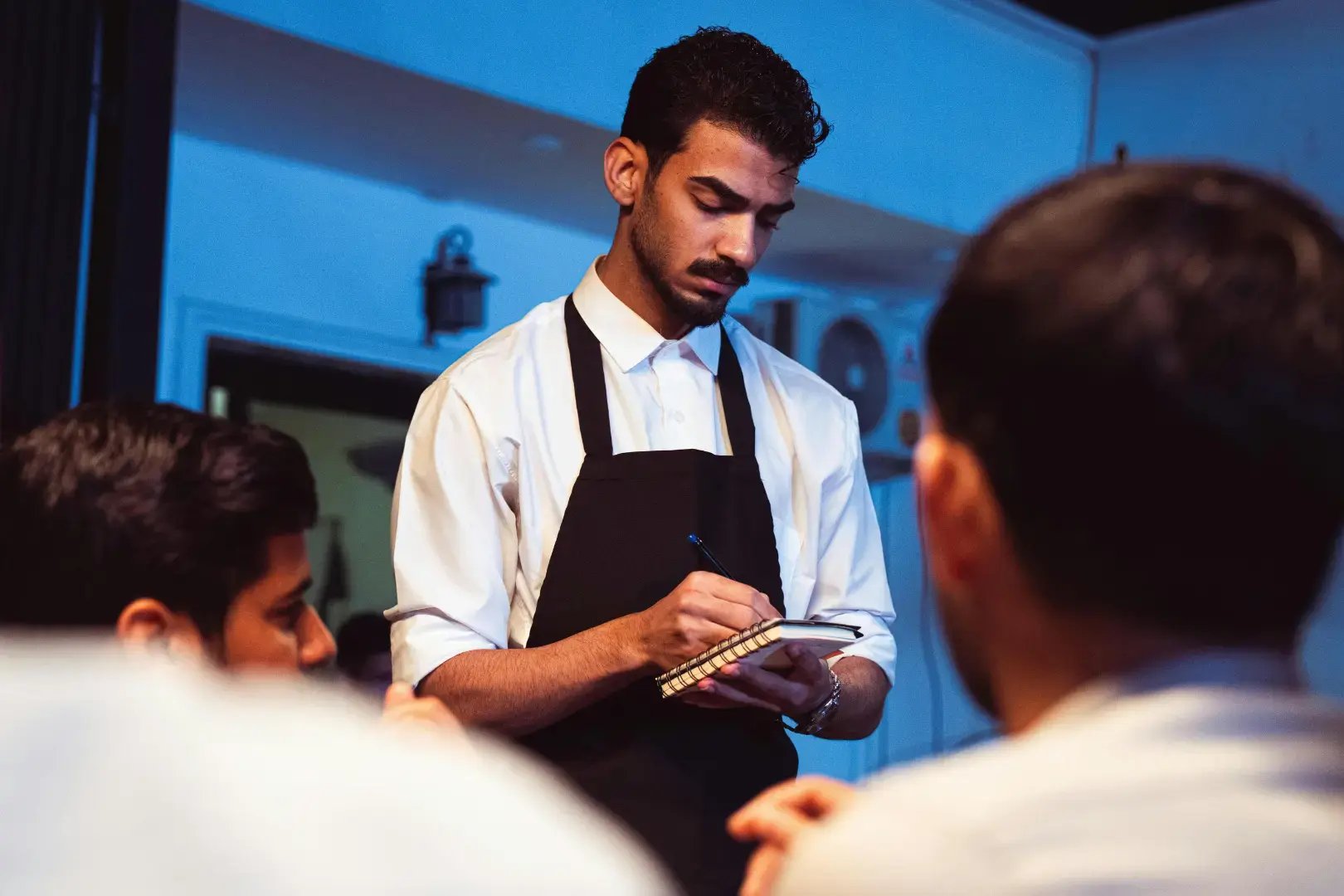
When the dining room is packed, a waitlist is forming, and the kitchen printer is firing relentlessly, the divide between the front of house (FOH) and back of house (BOH) can easily turn into a battlefield. Servers stress over impatient guests, while line cooks drown in complicated modifications. When communication breaks down, ticket times skyrocket, orders come out wrong, and the guest experience suffers.
Bridging the gap between the dining room and the kitchen remains a persistent operational challenge. An "us versus them" mentality frequently takes hold, but it doesn't have to be the norm. If you are asking how busy restaurants can improve communication between kitchen and front of house, the answer lies in adopting the right technology, refining daily processes, and shifting your team culture. When your FOH and BOH operate as a unified unit, table turnover increases, staff retention improves, and profit margins grow.
In this article, you'll learn:
- Why FOH and BOH alignment directly impacts your bottom line
- How technology like POS and KDS systems streamline order flow
- Actionable steps for daily communication, including pre-shift meetings and standardizing modifications
- Ways to build a collaborative, empathetic team culture
Why is FOH and BOH Communication So Critical?
Before implementing new solutions, it is essential to understand the true cost of poor communication. The kitchen and the front of house speak two very different languages, but they share the exact same goal: delivering a fantastic dining experience.
When communication fails, the ripple effects are felt throughout the entire establishment:
- Increased Food Waste: Miscommunicated orders lead to re-fires, which inflates food costs and wastes inventory.
- Slower Table Turnovers: Confusion at the pass creates bottlenecks. Slower service means fewer tables seated during peak hours, directly impacting your bottom line.
- High Staff Turnover: A toxic, blame-heavy environment burns out your best employees. Replacing and training new staff is incredibly expensive. Research published in the peer-reviewed journal Sustainability by researchers at MDPI found that a lack of clear communication channels is one of the leading drivers of high turnover in the hospitality industry — and that effective communication is one of four core pillars of employee retention. For more on how to address this in your own restaurant, read our guide on how to improve communication with your shift team.
- Poor Online Reviews: Cold food, missed dietary restrictions, and stressed-out servers lead to negative online reviews, damaging your long-term reputation.
How Can Busy Restaurants Improve Communication Between Kitchen and Front of House?
Creating harmony between the dining room and the kitchen requires intentional leadership. Here are the most effective strategies to streamline your restaurant's communication.
1. Implement a Modern Point of Sale (POS) System
Technology is your first line of defense against miscommunication. Relying on handwritten tickets leads to smudged ink, illegible handwriting, and lost orders. Equipping your servers with handheld POS tablets allows them to fire orders directly from the table to the kitchen in real-time. This eliminates the bottleneck at stationary POS terminals and ensures the kitchen receives clearly typed orders with standardized modification buttons.
Research from the Cornell Center for Hospitality Research found that table-side ordering technology significantly reduced table turn times and decreased the time servers needed to meet customer needs — translating to measurable revenue gains for operators. When a server doesn't have to decipher their own shorthand or run across the restaurant to ask the kitchen a question, service flows smoothly.
2. Transition to a Kitchen Display System (KDS)
To truly upgrade how busy restaurants improve communication between kitchen and front of house, a Kitchen Display System (KDS) is essential. A KDS replaces paper ticket printers with digital screens mounted at various kitchen stations.
A smart KDS routes specific items to the appropriate stations while keeping the entire order synced. It tracks ticket times with color-coded alerts, allowing the expediter and servers to know exactly where an order stands without shouting over the kitchen noise.
3. Master the Pre-Shift Meeting (Line-Up)
Communication needs to happen before the first guest arrives. Conducting a daily 10-to-15-minute pre-shift meeting is crucial for aligning both teams.
During this meeting, the Head Chef and the FOH Manager should cover:
- The 86 List: What items are sold out or running low?
- Daily Specials: Tasting the specials and discussing flavor profiles and ingredients.
- VIPs and Large Parties: Anticipating big hits to the kitchen at specific times.
- Menu Changes: Clarifying any new modifications or preparation methods to avoid mid-rush confusion.
Documenting these details using effective shift notes ensures that even staff arriving later in the day have access to the same critical updates. ShiftForce's Daily Log makes it easy to record and share these notes across your entire team in seconds.
4. Appoint a Strong Expeditor (Expo)
The expeditor is the essential bridge between the front and back of house, acting as the restaurant's air traffic controller. Instead of having five different servers shouting questions at the line cooks, all communication funnels through the expo.
A skilled expo ensures every plate matches the ticket before it leaves the kitchen, coordinates timing, and relays realistic wait times back to the FOH team. Putting a calm, highly organized person in this role drastically reduces friction.
5. Standardize Your Modification Language
Nothing irritates a busy line cook more than a ticket filled with custom, typed-out paragraphs from a server. Conversely, servers get frustrated when the kitchen refuses to accommodate a simple guest request.
Management must standardize how modifications are entered into the POS. Create dedicated buttons for common requests like "Sauce on the Side," "Allergy: Nut," or "Sub Fries." Establish clear rules about what can and cannot be modified during peak hours, and train the FOH on these boundaries. When the rules are clear, there is no need for mid-service arguments. For a deeper look at building consistent communication systems across your team, check out our post on the best ways to improve communication at your restaurant.
6. Encourage Cross-Training and Empathy
The root of many FOH and BOH conflicts is a lack of empathy. Servers often don't understand the intense physical heat and precise timing required on the line, while cooks may not realize the emotional toll of dealing with demanding guests.
A peer-reviewed study published in the International Journal of Hospitality Management found that empathy — specifically perspective-taking — is vital to successful teamwork in restaurants and hotels. Employees who understood the pressures of their colleagues' roles demonstrated stronger interpersonal relationships and better team performance overall.
Instituting a cross-training program puts this research into practice. Have a new server spend one shift shadowing the kitchen expo during a rush. Likewise, have a line cook shadow a server for a few hours. When staff members understand the unique pressures their coworkers face, patience and mutual respect naturally increase. Utilizing employee scheduling software makes it easy to coordinate these cross-training shifts without disrupting normal coverage.
Creating a Collaborative Restaurant Culture
Systems are only as effective as the people using them. Improving restaurant communication requires a cultural shift driven by management. Managers must lead by example by practicing calm, respectful communication, even when the restaurant is overwhelmed. Implement a "no shouting" rule for non-emergencies and encourage constructive feedback after the shift rather than aggressively during the rush.
Celebrate the Wins Together
Your staff is one big team. When the restaurant breaks a sales record, executes a flawless Friday night, or receives a glowing review, celebrate it as a joint victory. Host family meals where FOH and BOH eat together. Buy the kitchen a round of drinks after a particularly grueling weekend, or bring in coffee and donuts for the morning prep and host team. Shared experiences build camaraderie, and teams that like each other communicate much more effectively.
Running a successful food service establishment requires operational precision. If you are struggling with high error rates, slow service, and staff conflicts, it is time to evaluate your internal processes. By leveraging modern POS and KDS technology, enforcing structured pre-shift meetings, utilizing a strong expeditor, and fostering a culture of mutual respect — and backed by academic research showing these approaches work — you can transform chaos into a well-oiled machine.
Taking the necessary steps to improve communication between the kitchen and the front of house doesn't just make your employees' lives easier — it invests directly in the guest experience and the long-term profitability of your restaurant.
